A common source of neck pain is sleeping wrong due to our pillows.
But what is the best pillow for you? It depends.
If you sleep on your back or stomach (I don't recommend sleeping on your stomach EVER), then a down feather pillow should be fine.
Side sleepers would most likely benefit from a memory foam pillow with contoured rolls and/or wings.
Check out this video to help you decide which is best for you:
http://shopping.yahoo.com/video/playlist/fin-fit/buy-perfect-pillow-120500975.html
Wednesday, December 4, 2013

Tuesday, November 26, 2013
How to Avoid Sitting Too Much and Moving Too Little
Partly due to rising health costs and the awareness that sitting for long periods has a negative effect on health, there is some significant motivation to get workers out of their chairs and on their feet. In addition to the stated health benefits, people tend to be more productive when they work on their feet.
Even the American Medical Association (AMA) recognizes that prolonged sitting is bad for you. The AMA recently adopted a new policy on sitting at work. It is now urging employers and others to make alternatives to sitting available to workers. AMA board member Dr. Patrice Harris said, "[giving] employees alternatives to sitting all day will help to create a healthier workforce."
A Nation of Obese Sitters
So, is sitting a healthy thing to do? It would appear not! At least not for long periods of time. In spite of significant evidence, the plain fact is we have become a nation of sitters. We sit at work, sit on the way to and from work, sit while we eat, and sit during the evening while watching TV. Among some of the other negative aspects of prolonged sitting, there is a correlation between the amount of time spent seated and the development of obesity. It's really no wonder we are becoming a nation of obese sitters.
In addition to its recent policy on sitting at work, the AMA just saw fit to make obesity a disease, rather than a lifestyle choice. Interesting call! On a personal note, I've considered myself to be far too short for my weight most of my life. However, I don't consider that I have a disease; never have. Rather, I credit my own situation to more calories going in than going out. Labeling obesity as a "disease" sort of takes the personal-responsibility part out of the equation.
So, back to the sitting thing. There is ample evidence that sitting, whether at work or at home watching TV, has a negative effect. Studies show that prolonged sitting leads to an increase in childhood obesity, diabetes and even attention problems.
An interesting study was published a few years ago in the Archives of Internal Medicine. The study was conducted at Duke University and looked at the impact of obesity on worker's compensation costs. Workers with a body mass index (BMI) greater than 40, filed twice as many worker's compensation claims, had seven times higher medical costs, and lost 13 times more time from work when compared to non-obese workers.
Tools to Help Fight the "Sitting" Epidemic
In an attempt to curb the sitting epidemic, the American Heart Association (AHA) is promoting a new device. It's actually a smartphone app, Hotseat. It is designed to do one thing: Get people out of their seats for a few minutes throughout the day.
I'm not in the habit of promoting products, but this one has me intrigued. A pilot study by the AHA found that 71 percent of the app users took more breaks from sitting during the workday. Additionally, nearly 87 percent of the workers said that using the app made them more aware of the time they spend sitting.
Those using Hotseat set up an individual break profile, one that they feel comfortable and capable of doing. They then set up the number of breaks they want to take and when they want to take them. Each break is approximately two minutes in length. Rather than a fixed schedule, the app syncs the breaks with the worker's calendar. Nifty use of a smartphone. Fran Melmed, the creator of the Hotseat app, says it is designed to combat "sitting disease."
One other thing that seems to help is the treadmill desk. I wrote about this in an earlier article, but it's important to re-emphasize, because it does get people out of their chairs. The treadmill desk consists of a treadmill that is set up as a standing workstation.
Perhaps the most important thing you can do is move more. Don't spend too long in any one position. Take the stairs rather than the elevator. Park far enough away from the store that you are forced to walk a bit. Take walks after lunch and dinner.
I'm always amused when a worker who has injured his/her back is given a temporary work assignment that involves seated work. The opportunity to sit at work is considered to be "light work." In reality, it comes with its own price.
I'm personally pleased to see the interest in the negative effects of sitting. Prolonged sitting leads to a variety of health problems, from obesity to back pain to postural fatigue. It behooves all of us, doctors and patients alike, to move around more.
Wednesday, November 6, 2013
Commuting Your Health Away
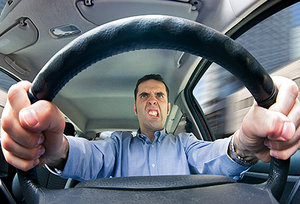
Driving is one of the biggest problems leading to back and neck pain I see in the office everyday. Vibration from the car and road alone causes breakdown in the body, not to mention the stress impact effects.
Unless you're a work-at-home member of the labor force (which has its own health risks, by the way), most of us commute from home to work and back again at least five days a week. From a health perspective, research suggests commuting is bad news, and it goes beyond the stress associated with those bumper-to-bumper, road-rage meltdowns you find yourself experiencing ... but somehow think you can handle day after day, week after week, year after year.
According to several recent studies, commuting – particularly longer times spent commuting – has a negative impact on weight, blood pressure, sleep quality / amount and heart disease. One study suggested the longer the commute, the higher the commuter's body-mass index, waist circumference, diastolic and systolic blood pressure, and metabolic risk factors. Another study found that high blood pressure, stress and heart disease were more likely in people who commuted more than 30 miles a day. And in a third study, researchers concluded: "Commuting long distances negatively impacts one's ability to capture adequate sleep."
The Telecommuting Age isn't necessarily solving the commuting health crisis, either; after all, even as more people work from home, the population at large continues to do more driving and less transportation by other means (bikes, foot, etc.). More time in cars, less time exercising - another recipe for health disaster.
 The solution, if there is one, is to find ways to make your commutes as
short, stress-free and infrequent as possible. Here are a few
suggestions:
The solution, if there is one, is to find ways to make your commutes as
short, stress-free and infrequent as possible. Here are a few
suggestions:
Unless you're a work-at-home member of the labor force (which has its own health risks, by the way), most of us commute from home to work and back again at least five days a week. From a health perspective, research suggests commuting is bad news, and it goes beyond the stress associated with those bumper-to-bumper, road-rage meltdowns you find yourself experiencing ... but somehow think you can handle day after day, week after week, year after year.
According to several recent studies, commuting – particularly longer times spent commuting – has a negative impact on weight, blood pressure, sleep quality / amount and heart disease. One study suggested the longer the commute, the higher the commuter's body-mass index, waist circumference, diastolic and systolic blood pressure, and metabolic risk factors. Another study found that high blood pressure, stress and heart disease were more likely in people who commuted more than 30 miles a day. And in a third study, researchers concluded: "Commuting long distances negatively impacts one's ability to capture adequate sleep."
The Telecommuting Age isn't necessarily solving the commuting health crisis, either; after all, even as more people work from home, the population at large continues to do more driving and less transportation by other means (bikes, foot, etc.). More time in cars, less time exercising - another recipe for health disaster.
The solution, if there is one, is to find ways to make your commutes as
short, stress-free and infrequent as possible. Here are a few
suggestions:- Map it out: If there are multiple routes to your job, try some trial and error to determine which one gets you to and from work in the shortest – and least painful – amount of time.
- Try 40 in 4: If your employer / state allows, ask about a possible four-day, 10-hour-a-day workweek option. You'll find that the 10 hours aren't a major drain, and you'll appreciate the extra day away from work – and out of the traffic jams.
- Carpool: Yes, you're still spending time in a car, but at least you aren't always the one driving (and dealing with other drivers); and you're also not alone with your traffic frustrations, all of which contribute to stress.
- Schedule it & stick to it: A likely explanation for why longer commutes lead to higher weight, etc., is not only that commuters sit in a car too long, but also that by the time they get home, they have little time – or perhaps interest – in exercising. Schedule in exercise before or after work and stick to the routine. It will help counter some of the effects of your commute, including stress.
Wednesday, October 23, 2013
Beating Breast Cancer One Step At A Time
October is breast cancer awareness month, so I wanted to focus on a subject that is close to my family since my wife is a breast cancer survivor.
There are many benefits to being active, but now women can prevent one of the most common cancers - breast cancer - by simply moving more. And, you'll be able to reduce your back and neck pain too at the same time!
The more physical a woman is and the more she incorporates activities such as walking, the more likely she will not develop breast cancer, according to two new studies.
In the first study, published online last week in Cancer Epidemiology, Biomarkers & Prevention, researchers with the Epidemiology Research Program at the American Cancer Society began by turning to a huge trove of data maintained by the cancer society. The database includes detailed health and medical information from more than 73,600 post-menopausal women, age 50 to 73, who enrolled in the study in the early 1990s. For almost two decades, they completed follow-up questionnaires every two years.
The questionnaires asked whether and how they exercised. About 9 percent reported never exercising. A few said that they exercised vigorously and often, typically by running, swimming or playing singles tennis. Most walked, usually at a pleasant pace of about 3 miles per hour. About half of the group reported that such strolling was their only form of exercise. Over the course of the study, 4,760 of the women enrolled developed breast cancer, according to the study.
The study found that those women who walked at least seven hours per week, usually distributed as an hour a day, had 14 percent less risk of developing breast cancer than those who walked for fewer than three hours per week, a significant reduction in risk.
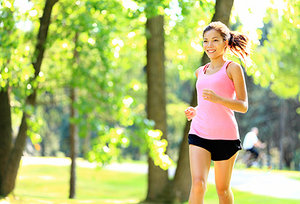 Meanwhile, those few women who were the most active, exercising up to 10
hours each week, had a 25 percent less risk of developing breast cancer
than those women who exercised the least.
Meanwhile, those few women who were the most active, exercising up to 10
hours each week, had a 25 percent less risk of developing breast cancer
than those women who exercised the least.
In another study published in Cancer Epidemiology, Biomarkers & Prevention, scientists from the School of Public Health at the University of Minnesota divided several hundred sedentary, pre-menopausal women into two groups. One group remained sedentary, while the other began a moderate aerobic exercise program that continued five times a week for 16 weeks.
At the start and end of the four months, the researchers collected urine and tested it for levels of estrogen and various estrogen metabolites, the substances that are formed when estrogen is broken down by the body. In this study, those volunteers who remained sedentary showed no changes in the ratios of their estrogen metabolites after four months. But, among the group that began exercising, the levels of one of the metabolites fell and another rose, shifting the ratio in ways that are believed to indicate less chance of breast cancer. The women also lost body fat and gained muscle.
If you are looking to get in shape and lower your risk of breast cancer put on your walking shoes.

There are many benefits to being active, but now women can prevent one of the most common cancers - breast cancer - by simply moving more. And, you'll be able to reduce your back and neck pain too at the same time!
The more physical a woman is and the more she incorporates activities such as walking, the more likely she will not develop breast cancer, according to two new studies.
In the first study, published online last week in Cancer Epidemiology, Biomarkers & Prevention, researchers with the Epidemiology Research Program at the American Cancer Society began by turning to a huge trove of data maintained by the cancer society. The database includes detailed health and medical information from more than 73,600 post-menopausal women, age 50 to 73, who enrolled in the study in the early 1990s. For almost two decades, they completed follow-up questionnaires every two years.
The questionnaires asked whether and how they exercised. About 9 percent reported never exercising. A few said that they exercised vigorously and often, typically by running, swimming or playing singles tennis. Most walked, usually at a pleasant pace of about 3 miles per hour. About half of the group reported that such strolling was their only form of exercise. Over the course of the study, 4,760 of the women enrolled developed breast cancer, according to the study.
The study found that those women who walked at least seven hours per week, usually distributed as an hour a day, had 14 percent less risk of developing breast cancer than those who walked for fewer than three hours per week, a significant reduction in risk.
Meanwhile, those few women who were the most active, exercising up to 10
hours each week, had a 25 percent less risk of developing breast cancer
than those women who exercised the least.In another study published in Cancer Epidemiology, Biomarkers & Prevention, scientists from the School of Public Health at the University of Minnesota divided several hundred sedentary, pre-menopausal women into two groups. One group remained sedentary, while the other began a moderate aerobic exercise program that continued five times a week for 16 weeks.
At the start and end of the four months, the researchers collected urine and tested it for levels of estrogen and various estrogen metabolites, the substances that are formed when estrogen is broken down by the body. In this study, those volunteers who remained sedentary showed no changes in the ratios of their estrogen metabolites after four months. But, among the group that began exercising, the levels of one of the metabolites fell and another rose, shifting the ratio in ways that are believed to indicate less chance of breast cancer. The women also lost body fat and gained muscle.
If you are looking to get in shape and lower your risk of breast cancer put on your walking shoes.
Wednesday, October 9, 2013
No Shortage of Back Pain
Back pain, back pain, everywhere there's back pain. Back pain is
second only to the common cold as the most frequent cause of sick leave,
accounting for approximately 40% of all work absences. It's also the
most common reason for filing workers' compensation claims (about 25% of
all claims filed in the U.S.).
How bad is the situation? A study in the American Journal of Public Health analyzed data from a national health interview survey and found over 30,000 respondents who reported daily back pain of one week or more in the 12 months prior to the survey. From this data, the authors estimated that more than 22 million people suffer from back pain that lasts one week or more; these cases result in an estimated 149 million lost workdays.
These estimates didn't even include workers who reported back pain of less than one week, or who missed work for the entire study period! If you've managed to escape back pain to this point, it's probably just a matter of time until you're caught. But if you do get caught and need relief, feel free to call me to see what can be done.
Reference:
Guo HR, Tanaka S, Halperin WE, et al. Back pain prevalence in U.S. industry and estimates of lost workdays. American Journal of Public Health, July 1999: Vol. 89, No. 7, pp1029-1035.
How bad is the situation? A study in the American Journal of Public Health analyzed data from a national health interview survey and found over 30,000 respondents who reported daily back pain of one week or more in the 12 months prior to the survey. From this data, the authors estimated that more than 22 million people suffer from back pain that lasts one week or more; these cases result in an estimated 149 million lost workdays.
These estimates didn't even include workers who reported back pain of less than one week, or who missed work for the entire study period! If you've managed to escape back pain to this point, it's probably just a matter of time until you're caught. But if you do get caught and need relief, feel free to call me to see what can be done.
Reference:
Guo HR, Tanaka S, Halperin WE, et al. Back pain prevalence in U.S. industry and estimates of lost workdays. American Journal of Public Health, July 1999: Vol. 89, No. 7, pp1029-1035.
Wednesday, September 25, 2013
School Backpacks and Back Pain? Here's What To Do...
Do you know what's in your child's backpack, how much it weighs, or how that weight is affecting their neck, shoulders, back and spine? You need to know, because studies suggest far too many children are carrying far too heavy loads to and from school, and with serious consequences.
For example, a 2003 study in Spine found a significant relationship between the incidence of lower back pain among schoolchildren (ages 12-18) and both the weight of their backpacks and the amount of time the backpacks were used. Some backpacks were inordinately heavy; 18.9 percent of the students surveyed carried backpacks that weighed more than 20 percent of the student's body weight when full.
In another study, published in the same journal a year earlier, four of five children said their backpacks were heavy, and two-thirds said they felt fatigue when carrying theirs. The study also showed that lifetime prevalence of low back pain was related to the amount of time children carried backpacks on their shoulders.
Not very good news, is it? So, what can you do as a parent to help your children in this regard? Here are a few simple suggestions courtesy of National University of Health Sciences in Lombard, Ill.:
- Make sure your child's backpack weighs no more than 10 percent of their body weight.
- Also ensure that it doesn't hang more than 4 inches below their waistline.
- Urge your child to wear both shoulder straps. The straps should be adjustable so the backpack can be easily fitted to your child's body
Wednesday, September 11, 2013
Think Before You Drink
A common source of back pain and pain associated with arthritis is due to excessive weight gain. If you are a soda drinker, just cutting out this beverage (even the "diet" ones too!) can result in quick weight loss and help you gain control over back pain. But if that weren't enough for you to give up sodas, below are even more reasons and health benefits:
10 Reasons to Stay Away from Sodas and Energy Drinks
- The average soda has no nutritional value - only sugar, carbonated water, caramel color, natural flavors, caffeine, phosphoric acid and high-fructose corn syrup.
- According to Harvard researchers, the risk of childhood obesity increases 1.6 times with each additional daily serving of soda consumed.
- Soda adds more sugar to a typical 2-year-old's diet than cookies, candies and ice cream combined.
- Numerous studies indicate that the sugar and acids in soda may cause tooth decay.
- According to some household cleaning Web sites, soda can be used as a toilet cleaner and rust and grease remover.
- A Harvard study of teenage athletes identified a strong association between soda consumption and bone fractures in 14-year-old girls.
- An average can of soda has 35-38 mg of caffeine and as much as 13 teaspoons of sugar.
- Most energy drinks contain about 80 mg of caffeine, along with other legal stimulants like guarana and ginseng.
- Certain energy drinks contain huge blasts of caffeine (up to 280 mg) - almost triple the caffeine in a cup of coffee.
- Energy drinks can boost heart rate and blood pressure, increase anxiety, dehydrate the body and cause insomnia.

Subscribe to:
Posts (Atom)